
SOILED BEDDING TREATMENT
SOILED BEDDING TREATMENT
SOILED BEDDING TREATMENT AUTOMATED SYSTEM FOR BEDDING VACUUM AND CAGE FILLING
- Dump Station
- Cyclone Separator
- Dust Collector
- Suction Units
1) DUMP STATION
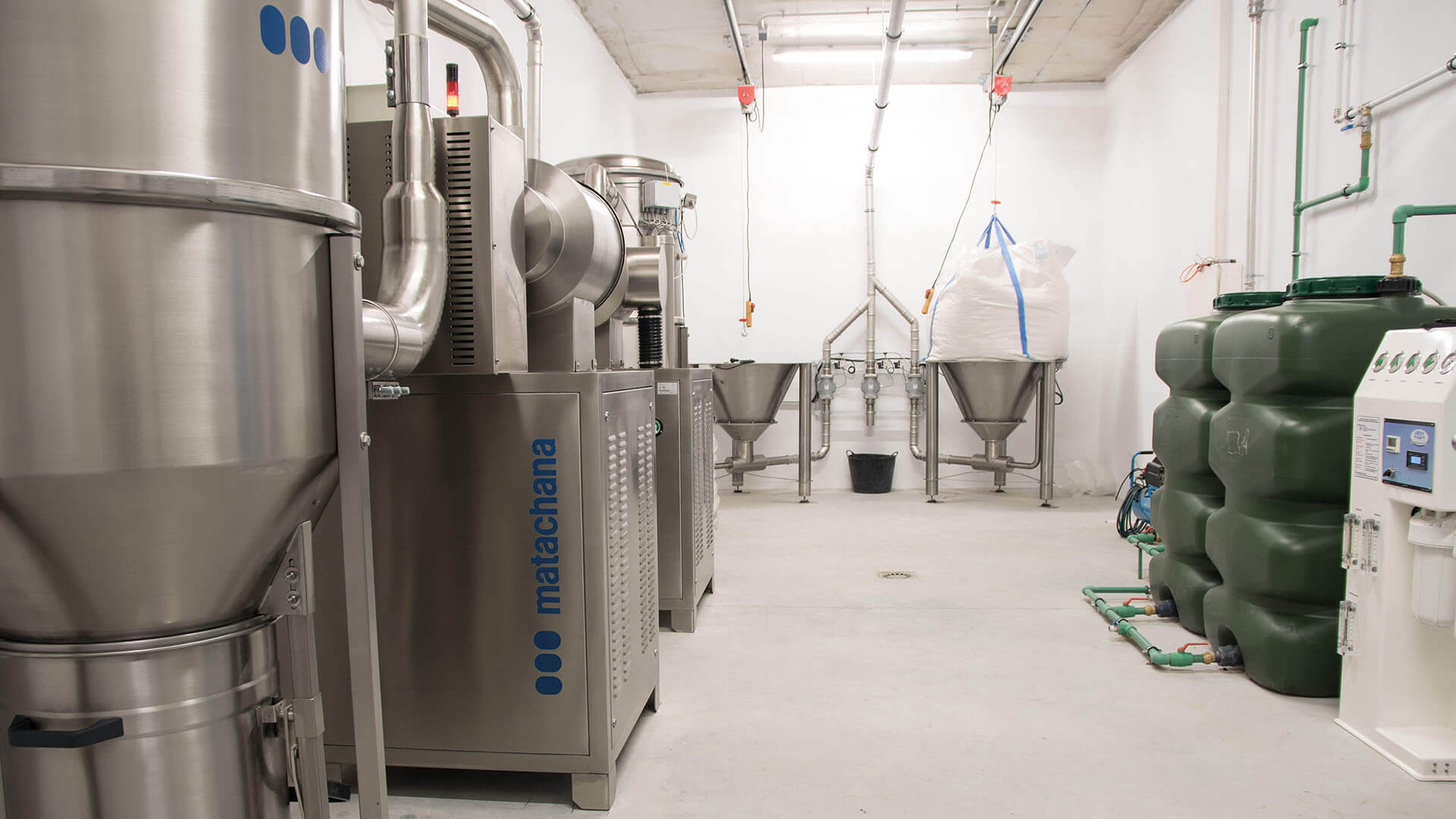
The dump station introduces soiled bedding into the transportation line gradually to ensure that the correct flow is maintained. Transportation air is also used as dust extraction to collect airborne dust and allergens. An optional hood fitting over the unit directs the air path away from the operator to minimise allergen exposure.
For operator safety interlocked covers protect operators from moving parts. All parts in stainless steel.
2) CYCLONE SEPARATOR
Soiled bedding is separated in the cyclone separator and discharged from the vacuum line through a rotary valve. The bedding can then be discharged in a variety of ways into waste containers to suit the size and operational needs of the facility.
Soiled Bedding Container
Soiled bedding container for material discharging with filling by compactor or by a secondary fan to ensure maximum filled capacity. Various models to suit the size and operational needs of the facility.
3) DUST COLLECTOR
Dust collector into which the dust formed during the operation is separated, with integral collection bin.
4) SUCTION UNITS
Suction units are used to generate the airflow for the transportation on both the soiled and the clean sides of the system. There is always a separate unit for each side to prevent risk of cross contamination. The units are matched to the unique pipe design of each system to give each single system an optimal performance. They are placed in sound absorbing boxes and can have HEPA and charcoal filters on the discharge if necessary.
SOILED BEDDING DISPENSER
Silent clean bedding dispenser model LAB DISPENSER FEATURES:
- With a capacity of 3 bags of chips for dosage of about 110 cages type IIL.
- Low sound level (65 dB in operation).
- 5 dosage possibilities.
- Dosing two cages simultaneously.
- Faster and more accurate than manually.
- Improved operator’s working conditions (wrist pain, dirt, dust emanation).